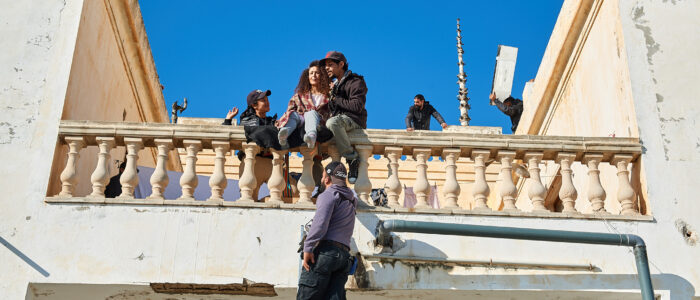
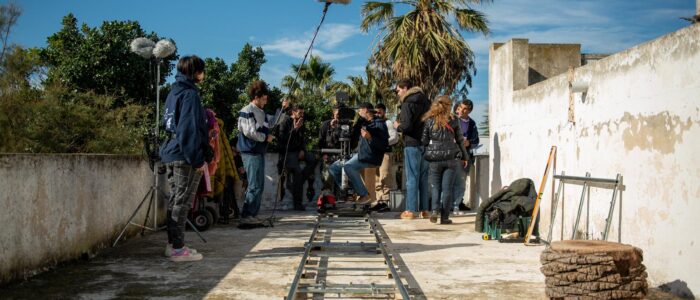
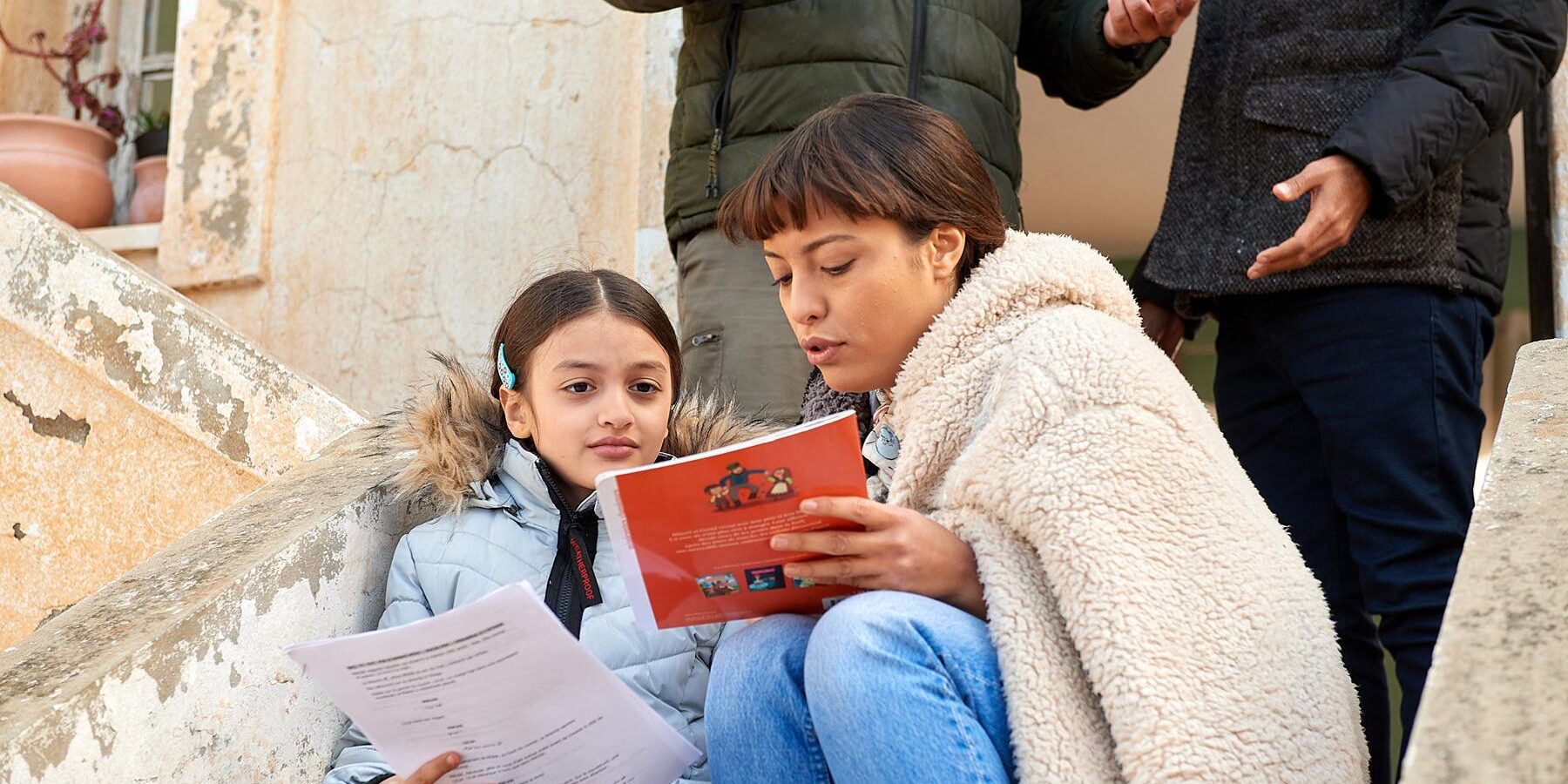
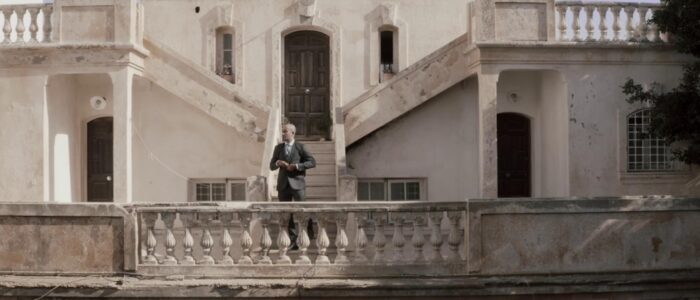
On the morning of November 2, I enter the arena. I’m as ready as I’ve ever been. My gladiatorial, reticent concentration is at an all-time high. I stare straight ahead, my eyes riveted on the set, the Villa Vito, a colonial building on the seafront that’s been converted from top to bottom for the needs of the film. We’re in Le Kram, a northern suburb of Tunis, and I’m just coming out of 7 weeks of intensive rehearsals with my actors, who have been looked after by a physical trainer, my friend Kadhem NADIM, a Krav Maga instructor and top boxer. I exchange a few words with Mohamed, my first assistant. The cinematographer, grips, electricians and set designers are all hard at work.
I’m holding in my hand my homemade storyboard, created during long preparation sessions, where the film is visualized on paper, shot by shot, sequence by sequence. This storyboard is my lifeline, my Ariadne’s thread to help me find my way through the twists and turns of this singular story written by my friend Sophia HAOUES, a screenwriter by trade and long-time companion. My instructions are meticulous: framing, shot values, optics, observations and notes essential to the scene, not forgetting a few lines of dialogue, the most important ones. I use 3 colors: black for the frame, blue for the actors’ movements, red for the camera movements. I’m zen, but only in appearance. My muscles tense up because I know that the battle will be tough, and that day after day I’ll have to wrest the film’s images from the adversity, the ambient inertia, the nonchalance and sometimes even the hostility of some people.
But the most worrying thing for me and for my aliant co-producer Luc D’ALESSANDRO, is that we still don’t have our lead actress, the one who will carry the film on her shoulders, the one Sophia has imagined and whose profile, character traits, resilience and fatalism she has refined in the image of the real Malek, the victim of two appalling rapes 10 years apart, a young woman surprisingly cold, distant and withdrawn from the world. I can still see her empty gaze and hear her short, precise, clinical sentences coming back to me. Her own way of protecting herself from the outside world, of doubling herself as if she were another, this other in whom she recognized herself, this other who whispered in her ear.
All the actresses in Tunisia came to our offices in La Marsa, but the young pretenders, frightened and sometimes even put off by the bold, uncompromising treatment of this news item, all turned down the role.
We were faced with a dilemma: postpone the shooting date or take the admittedly insane risk of starting without the lead actress, and pray in chorus that a miracle would happen thanks to a new, more focused cast already in the starting-blocks. Mohamed, I salute your doggedness, your perseverance and your firmness, without which the casting of this film would have remained a dead letter!
On the 11th day of shooting, the same Mohamed whispered in my ear that a young girl wished to speak to me. Wearing a dark coat and a black beret, she is pacing up and down the beach. I join her without much conviction, but I immediately notice her intense gaze, her very own way of staring at her interlocutor. We exchange a few words, rather sparingly. No showboating, no ostentation. I already know instinctively that it’s her, and I tell her about Malek, what she’s been through, and the challenge that awaits her if the film test we’re about to give her proves successful. Very quickly, as with all the other actresses, I probe her to find out whether she has a lover, a fiancé or parents who are too strict or uptight, questions she brushes aside with a wave of her hand. Her freedom to act and think is non-negotiable. Saved by the bell!
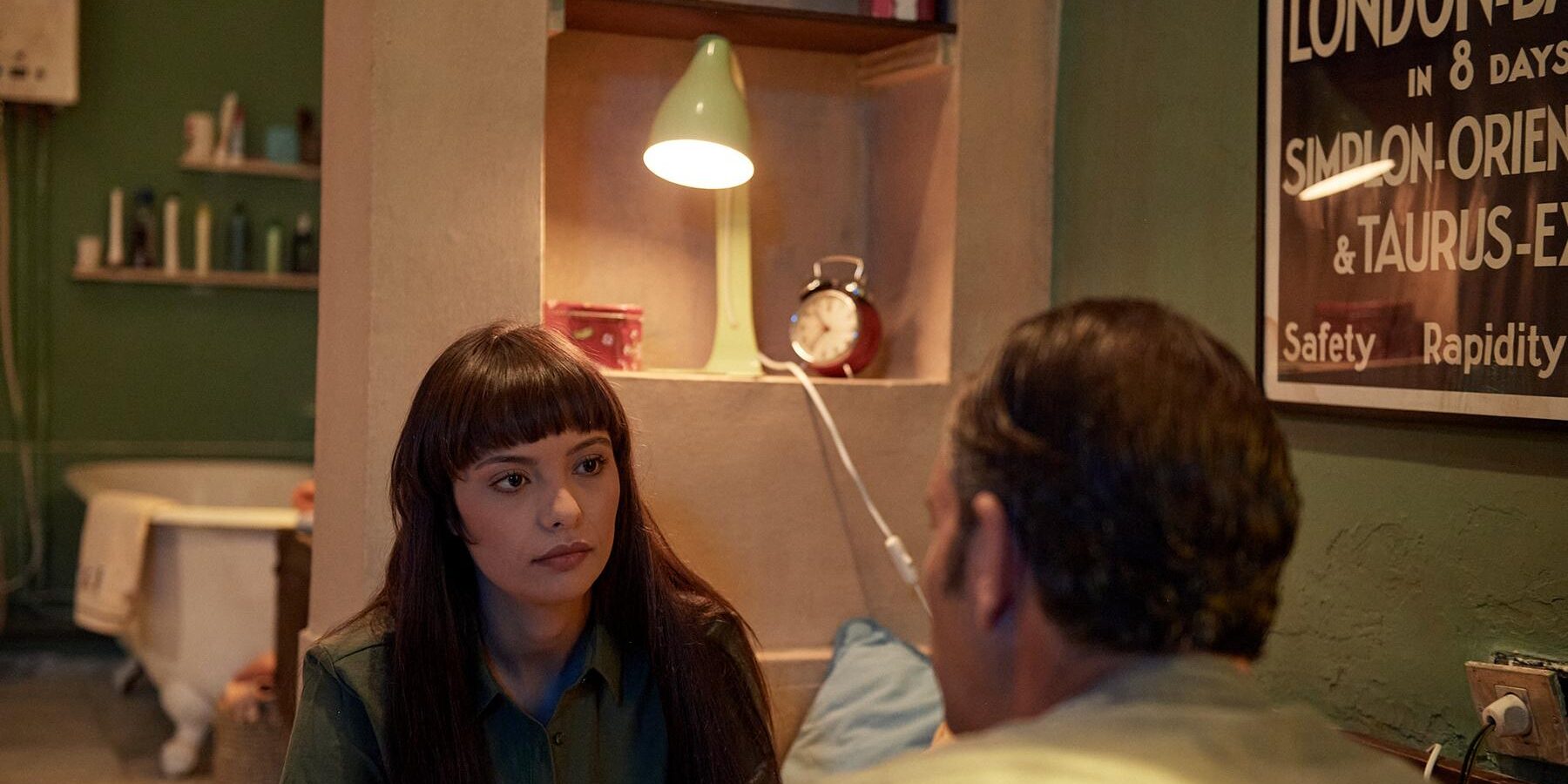
Shooting with the film’s heroine can finally begin. We’re both exhilarated by this excellent news and haunted by an almost existential question for us: Will Rym be up to the task and succeed in embodying Malek in all his complexity? The next few days will prove that the fearless, unapologetic girl from the beach will rise to the challenge with flying colors, proving wrong all those who have dismissed her as an untalented opportunist.
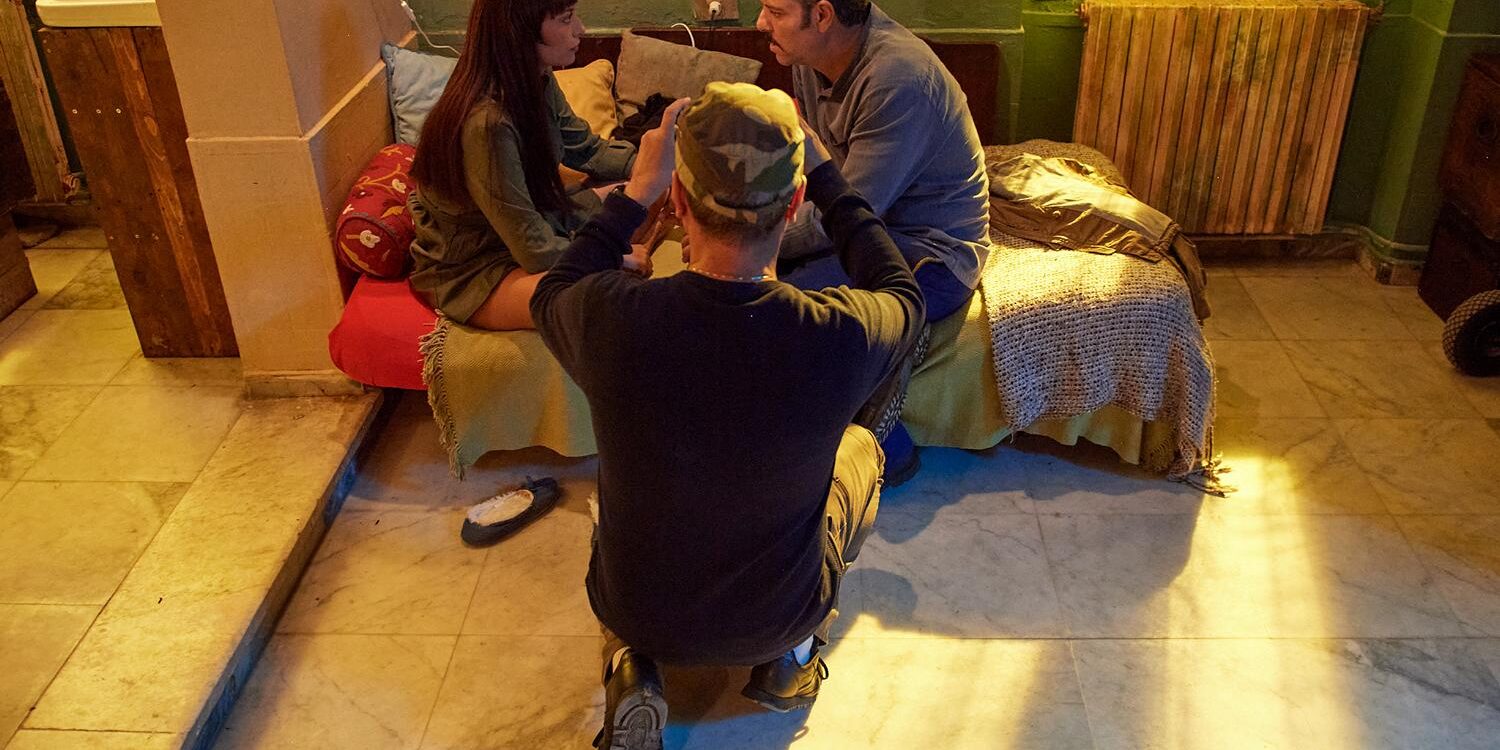
An hour later, we put her through her paces and hired her on the spot. To avoid any setbacks, Rym shoots the rape scene from the outset, a scene that requires numerous takes over 3 days and 3 nights. Everyone on the team was impressed by her perfectionist streak and her determination to give it her all. She was a street performer with a number of minor film credits, but SILENTIUM was to be her first major role, and she had no intention of missing out!
As we progressed through the rough and sometimes violent shoot, the cast closed ranks around me. Their loyalty and professionalism were unfailing. This diary is my way of paying tribute to them. If SILENTIUM exists today, it’s largely thanks to this concentration of talent, sensitivity and humanity. They are the ones who give body to the film, embodying their characters on screen with strength and accuracy. As Baudelaire said in Les Fleurs du Mal, they are an invitation to travel. We salute them!
24 months later, after laborious post-production (post-production refers to everything that comes after the shoot, including image and sound editing, sound effects, post-synchronization, music recording, mixing and color grading), Luc and I are exhausted by this marathon of madness, but brave and upright in the face of a barrage of annoyances, hassles of all kinds, lies and bad faith. I sometimes see us as Don Quixote and Sancho Panza storming windmills, riding our mounts through the bleak countryside of La Mancha south of Madrid.
However, this post-production revealed some extraordinarily competent and serious people who put all their talent at the service of the project, such as Samy GHARBI, the great sound engineer, and Sélim ARJOUN, the young music composer. A real discovery at a time when we needed to move quickly and efficiently with the production of the film.
Today our film exists, and the public will decide its fate. But we can’t wait to see it on the big screen in Tunisia and around the world. Kubrick was fond of saying: “Anyone who has had the privilege of directing a film is aware that it’s like trying to write War and Peace in an amusement park bumper car, but when the task is finally accomplished, few things in life can compare with what you feel then.
Photos: Ahmed OUERTANI